
This page contains content information about gender-based violence which may be distressing to some readers.
Support services are listed under the ‘Find support’ section.
Fair treatment, justice, celebrating diversity and supporting those who are vulnerable are all part of the University’s culture, anchored in Christian tradition. For the University of Divinity, fair treatment of all people is underpinned by the principle of equity in education, employment and wellbeing for current and prospective students and staff, and by providing a safe environment.
If you or someone else is in immediate danger, call 000.
For more information about support services see the Health and Wellbeing webpage
Men’s Referral Service Ph: 1300 766 491 Available 24/7
Provides a range of services to support men concerned about their behaviour to change what they are doing and keep women, children and communities safer.
MensLine Australia Ph: 1300 78 99 78 Available 24/7
Phone and online counselling for men with concerns about mental health, relationships, family violence (using and experiencing), stress, and suicidal thoughts.
1800 RESPECT Ph: 1800 737 732 Available 24/7
Phone and online counselling to support people impacted by domestic, family or sexual violence (including adult survivors of child sexual abuse and sexual harassment). They can also provide information and make referrals to local DF&SV services.
Rainbow Sexual, Domestic and Family Violence Helpline Ph: 1800 497 212 Available 24/7
For anyone in Australia who is from LGBTQIA+ communities who has recently or in the past experienced DF&SV and their family members, friends and supporters.
If someone tells you they have experienced gender-based violence, your response matters. If there is immediate danger: Call 000
The Code of Conduct applies to all members of the University. It is a positive expression of the University’s mission and values and helps us to understand our obligations and responsibilities. The University of Divinity is committed to the highest standards of conduct, as expressed in Regulation 9 of the Code of Conduct.
The University is equally committed to meeting the requirements of the Universities Accord (National Higher Education Code to Prevent and Respond to Gender-based Violence) Bill 2025, also known as the National Code. The National Code seeks to reduce the incidence of gender-based violence, proactively strengthen prevention efforts, improve the response to gender-based violence; and hold higher education providers accountable for their performance.
The University is committed to providing a safe and respectful environment for all members of the University.
All members of the University are required to:
Any form of conduct that constitutes unlawful discrimination, harassment, bullying, vilification or victimisation, or other inappropriate behaviour based on protected attributes.
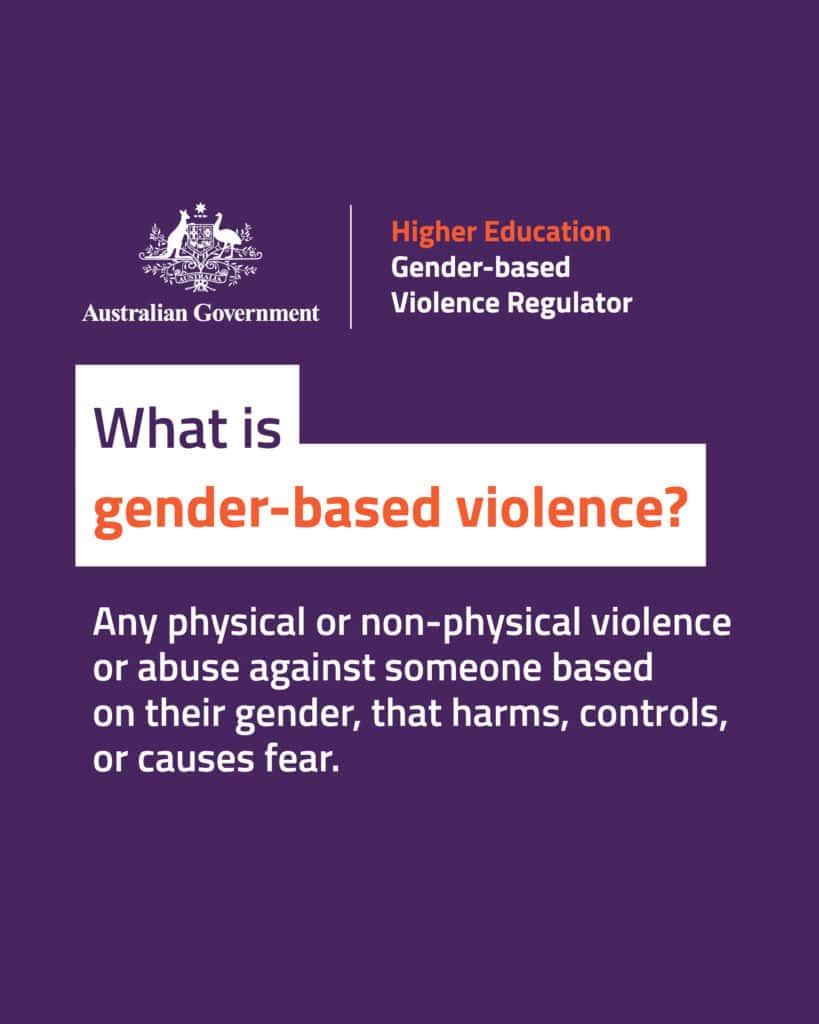
Gender based violence is any form of physical or non-physical violence, harassment, abuse or threats based on gender, that result in, or is likely to result in, harm, coercion, control, fear or deprivation of liberty or autonomy.
This can include actions that harm, control, or cause fear, such as:
Actual or potential modern slavery practices including forced labour, human trafficking, or exploitation.
Behaviour which does or could amount to a breach of the University’s Code of Conduct and/or criminal law.
Sexual assault and sexual harrassment are forms of gender-based violence.
Sexual assault is an inclusive term used to describe any type of unwanted sexual act inflicted upon a person that they have not freely and voluntarily consented to, have withdrawn consent to, or occurs in circumstances where they are incapable of giving free and voluntary consent. It is inclusive of a variety of unwanted sexual behaviours a person may be subjected to, ranging from activities such as unwanted sexualised touching through to sexual intercourse without consent. Sexual assault can include sexual behaviours that involve the use of force, threats, coercion or control towards a person. Sexual assault typically involves an exploitation of vulnerability, betrayal of trust and the misuse of positional power.
Consent is the free and voluntary agreement to engage in sexual activity by a person who is of the age of consent. The age of consent to sexual activity across Australia is 16 years of age, except for South Australia and Tasmania where the age of consent is 17 years. Consent to sexual activity requires agency, safety and freedom from coercion and can be withdrawn at any time during the sexual activity. A person who is unconscious or asleep, incapacitated, or affected by alcohol or other drugs cannot give consent.
Under relevant State and Commonwealth legislation, sexual harassment is an unwelcome sexual advance or request for sexual favours or conduct of a sexual nature which makes a person feel offended, humiliated and/or intimidated where a reasonable person would anticipate that reaction in the circumstances.
Sexual harassment can involve:
Sexual harassment is unlawful under the Sex Discrimination Act in different areas of public life, including employment, service delivery, accommodation and education. Some types of sexual harassment may also be criminal offences. It is also unlawful for a person to be victimised for making, or proposing to make, a formal report of sexual harassment.
Most international students have a positive experience studying in Australia. However, violence against women, non-binary or gender diverse individuals can happen here, just like in any other country. This resource called Sex and relationships: Understanding your rights in Australia was created by the Restore Centre at the University of Melbourne. It provides international students with information about their right to safety and gives more information about services and support available if experiencing abuse, violence and sexual assault.
Made in accordance with whistleblower legislation or policy, involving the disclosure or formal report of serious wrongdoing such as fraud, corruption, misconduct, or other unlawful or unethical conduct within or connected to the University.
For more information see the page on Whistleblowers.
The University requires all its members to abide by the University’s Code of Conduct and its related Policies. The Code of Conduct includes being willing to speak out about misconduct. The University aims to be an institution in which misconduct is challenged and addressed and in which the reporting of misconduct is encouraged and supported.
The University of Divinity is committed to empowering students, staff and stakeholders to share any concerns about incidents of gender-based violence, discrimination and other forms of misconduct. If you have experienced or witnessed any of these concerning behaviours, you are encouraged to share these with the University.
The University has partnered with Stopline to provide a variety of ways for people to disclose or make a formal report of gender-based violence and other forms of misconduct.
Stopline is a confidential and independent provider who can receive any disclosures and formal reports via telephone, mail, email or this online form, and will provide the confidential information about disclosures and formal reports to the University’s Fair Treatment and Safeguarding Coordinator. Stopline’s service is available to all University of Divinity students, staff, contractors and stakeholders, and enables people to maintain anonymity if they choose to.
Any breaches of the University’s Code of Conduct, the Gender-based Violence Prevention and Response Policy, and related policies, can be disclosed or formally reported via Stopline. This may include any criminal offence, breach of legal obligation, unsafe behaviour, harassment, bullying or experiences of gender-based violence (see the Definitions section of this website for details).
You can use Stopline to disclose or make a formal report about any of the following:
A disclosure is the sharing of information regarding an incident of gender-based violence or other forms of misconduct either verbally or in writing, anonymously or through a third-party. You can make a disclosure to receive information about your support options and any adjustments that may be needed to ensure your safety and remain engaged with your studies or work. A disclosure does not mean you are formally reporting the misconduct for it to be investigated.
If the person about whom a disclosure or formal report is being made is no longer a student or member of staff at the University, the University can provide the discloser with support and advice on external reporting options.
Yes, you have options available to be anonymous when you make a disclosure. You may choose to remain completely anonymous to both Stopline and the University of Divinity. If you choose this option, your identity and contact details can’t be disclosed.
To assist with communication while maintaining your anonymity, you can create a secure account through the Stopline portal. By creating an account, you will be able to securely receive messages and respond to possible requests for further information while remaining anonymous to both Stopline and the University of Divinity. If you choose not to create an account, Stopline and the University of Divinity will be unable to contact you for clarification or to provide you with additional information that may assist you.
The University can only investigate disclosures in certain circumstances, such as if there is an imminent threat to the health and safety of a person, or a pattern of disclosures is revealed indicating the same perpetrator may be responsible for the incident/s. If a disclosure is to be investigated, the University will inform the discloser and consider the views of the discloser before progressing to an investigation.
The University can only investigate anonymous disclosures in certain circumstances and is unable to consult with a discloser if they are completely anonymous. To assist with communication while maintaining your anonymity, we strongly recommend creating a secure account through the Stopline portal. By creating an account, you will be able to securely receive messages and respond to possible requests for further information while remaining anonymous to both Stopline and the University of Divinity.
If you choose not to create an account, Stopline and the University of Divinity can’t contact you for clarification or to provide you with additional information that might help you.
A formal account or statement made with the intent that the University investigate the report. The University must investigate all formal reports of gender-based violence where the person accused of misconduct is a student or staff member of the University, regardless of the context in which the gender-based violence occurred.
A person making a disclosure may at a later time choose to change this to a formal report. There is no time limit on converting a disclosure to a formal report and a person may choose to do so at any time.
The University will adopt a respectful, proportionate, compassionate and supportive approach in all cases, ensuring procedural fairness. Where the University investigates a formal report of gender-based violence, any findings made will be determined according to the balance of probabilities. The University can’t make decisions about whether a crime has occurred if you make a formal report but can investigate whether any University policies have been breached.
The University will only report matters to police in circumstances where legally required to do so.
For more information about how to make a disclosure or formal report via Stopline click here [Link to Stopline FAQ’s]
In an emergency call 000.
For non-urgent police assistance across Australia call the Police Assistance Line on Ph: 131 444 Available 24/7 for non-emergencies where police attendance is required but there is no immediate danger.
You can also report criminal acts (such as assault, sexual assault, domestic & family violence, etc) to your local police.
National Student Ombudsman (NSO) nso.gov.au Ph: 1300 395 775
Offers a free, impartial, and independent service for students to escalate complaints about the actions of their higher education provider.
Students from the University’s smaller College communities might prefer to make a report in the first instance to the NSO. The NSO will ask students if they have raised the matter with their University, but it is not mandatory for them to report to their university before reporting via the NSO.
The NSO receives reports across a range of issues including:
The NSO are able to:
All students, including domestic, international and higher degree research students, can contact the NSO about their higher education provider.
Students can make a report via online form, phone, in writing or in person. See the website nso.gov.au for details.
Australian Human Rights Commission Ph: 1300 656 419 Mon – Fri 10 am to 4pm (AEST).
Investigates complaints of unfair treatment or harassment in areas of public life (such as employment, education, or accessing services) due to the following attributes:
The office of the eSafety Commissioner can help with tech-based gendered violence where it reaches the legal threshold for investigation under one of their schemes:
eSafety can help have the content removed or stop the threats.
Contact online via https://www.esafety.gov.au/about-us/contact-us
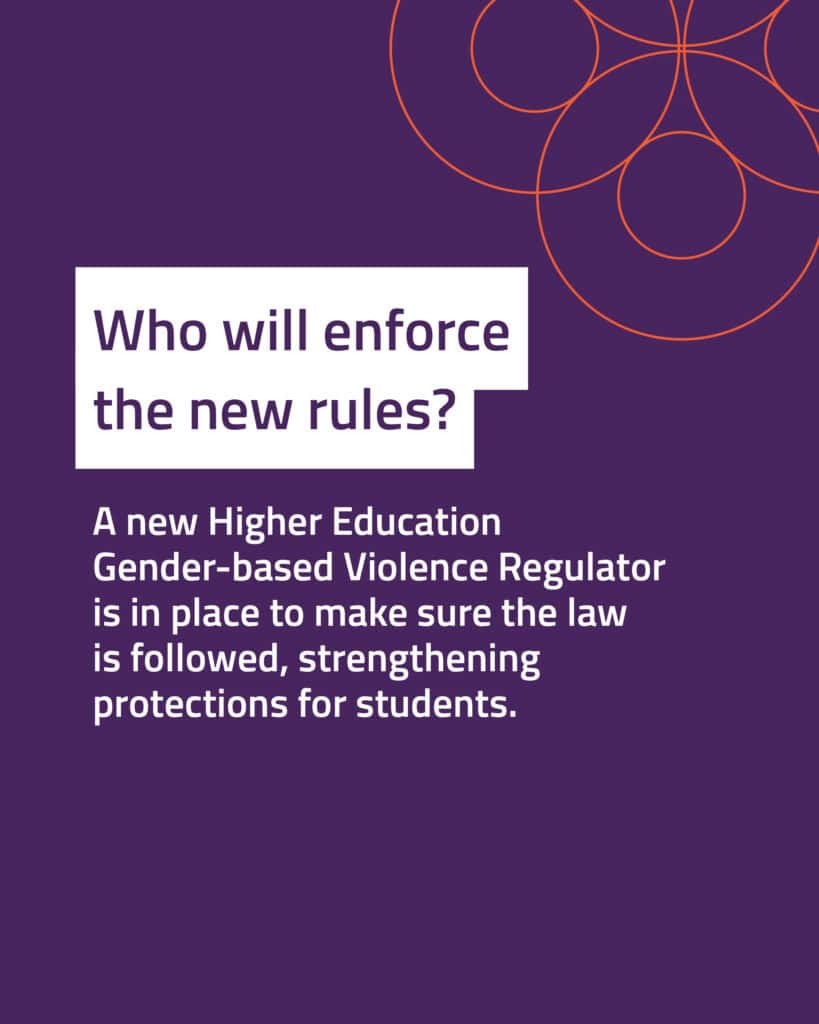
The University of Divinity is committed to preventing and responding to all forms of gender-based violence to provide a safe and respectful environment for all members of the University community. The University is committed to meeting the requirements of the Universities Accord (National Higher Education Code to Prevent and Respond to Gender-based Violence) Bill 2025, also known as The National Code. The National Code seeks to reduce the incidence of gender-based violence, proactively strengthen prevention efforts, improve the response to gender-based violence; and hold higher education providers accountable for their performance.
The University will:
The University’s People and Culture Committee must provide the de-identified data required under Standards 6.13 and 6.14 of the National Code in relation to disclosures and formal reports of gender-based violence for the previous calendar year to the Gender-based Violence Regulator by 30 June each year and to the University Council annually.
The data includes but is not limited to the following:
Coming soon…
The University’s Fair Treatment and Safeguarding Coordinator is responsible for providing administrative support for complaint processes in accordance with the Complaints Policy, the Code of Conduct, the Gender-based Violence Prevention and Response Policy and associated policies to ensure that all disclosures and formal reports are handled appropriately. The Fair Treatment and Safeguarding Coordinator is the contact point between Stopline and the University.
For further information or queries contact the University’s Fair Treatment and Safeguarding Coordinator